Critical Infrastructure Inspection Without Visual Observers
Published:
January 9, 2026
Category:
Airspace Integration
Client:
Critical Infrastructure Inspection Without Visual Observers
Background
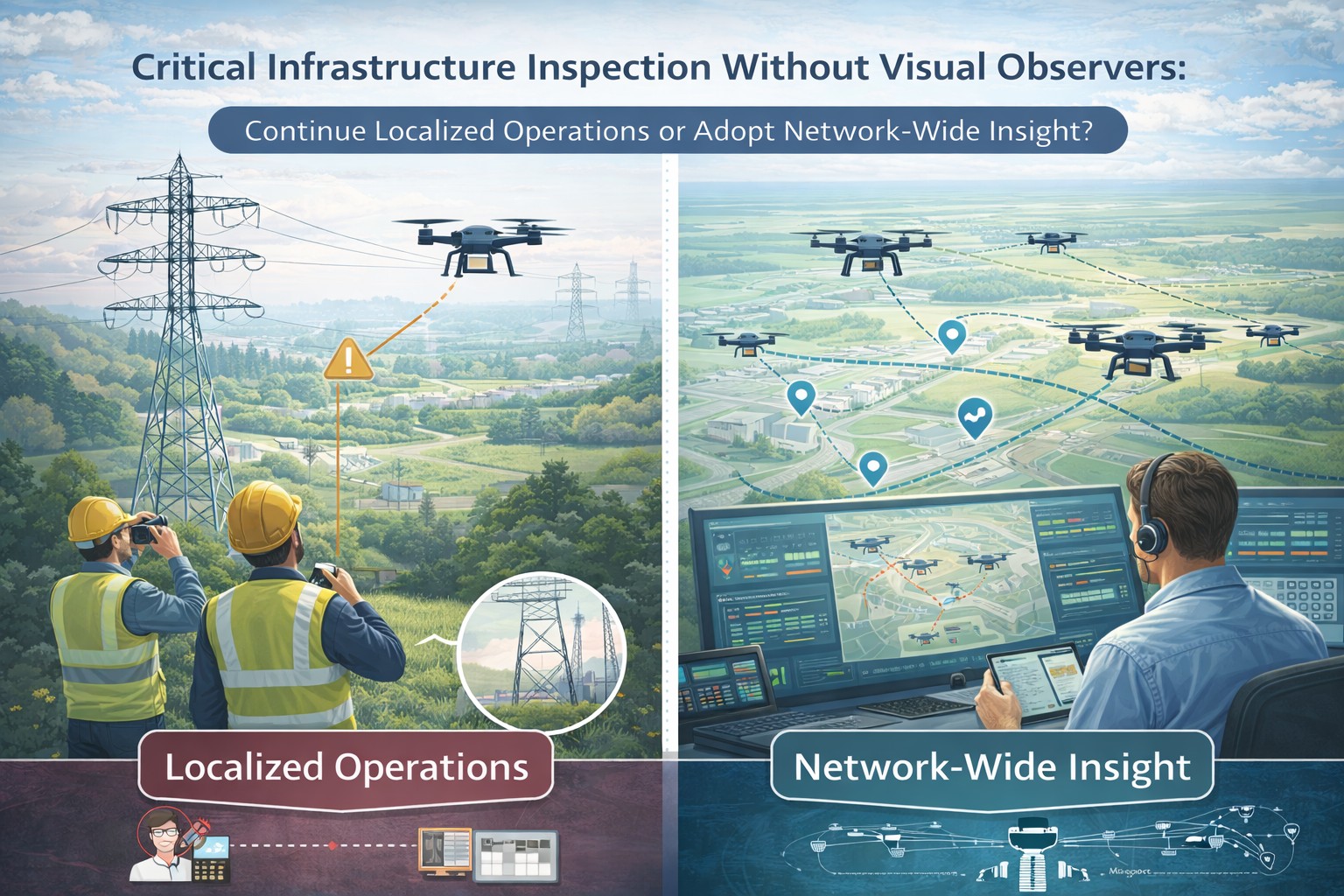
Large infrastructure owners, including utilities such as the New York Power Authority, began deploying drones across extensive transmission and distribution networks to improve inspection frequency and worker safety.
The geographic scale of these networks made traditional visual observation models impractical.
The Challenge
The utility faced several operational constraints:
Thousands of miles of assets throughout various geographies and municipalities.
Limited personnel availability
Increasing regulatory scrutiny around BVLOS operations Scaling drone operations without centralized oversight introduced unacceptable operational and compliance risk.
The Decision Point
Executives had to determine whether drones would remain a localized inspection tool or evolve into a network-wide operational capability.
This required answering a difficult question:
How do we manage airspace risk across an entire infrastructure network without centralizing control?
Outcome
By integrating UTM services, the utility gained:
Strategic conflict detection across large geographic regions
Centralized governance and oversight
Reduced dependency on field-level coordination.
One step closer towards lowering risk of operating in proximity to enterprise crewed assets
Drones became a persistent inspection capability rather than a specialized resource deployed sparingly.