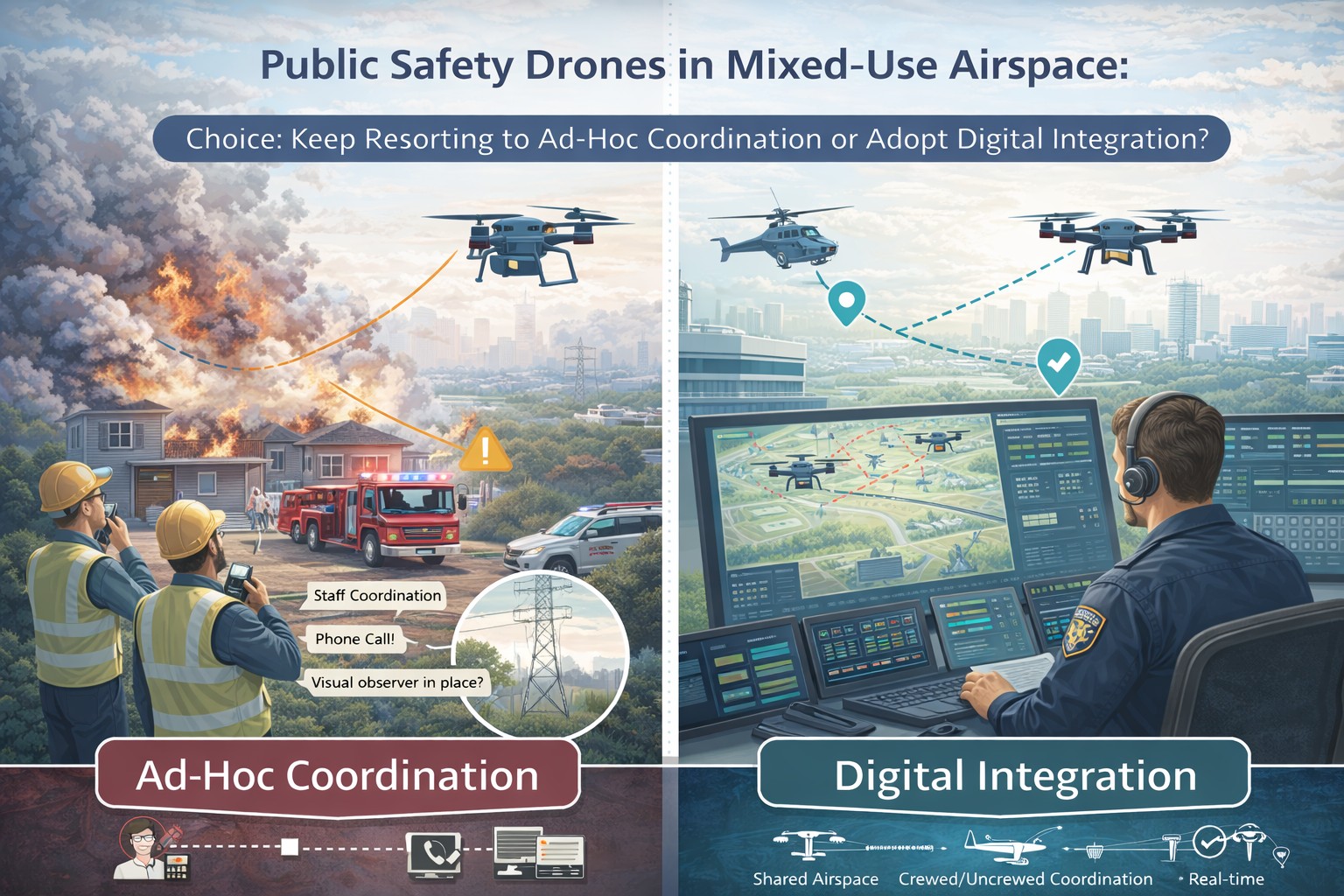
Law enforcement agencies such as the Arlington Texas Police Department increasingly relied on drones for search and rescue, situational awareness, and incident response.
Unlike commercial operations, public safety missions were inherently unpredictable and often occurred in airspace shared with emergency helicopters.
The Challenge
Public safety agencies needed:
Airspace prioritization to ensure right-of-way is awarded when necessary
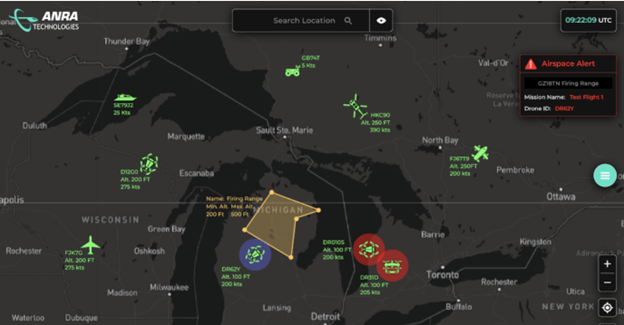
Real-time awareness of other airborne asset
Assurance that drone deployment would not interfere with crewed responders
Protection and safety of critical infrastructure or the public.
Manual coordination during emergencies proved inadequate.
The Decision Point
The agency faced a governance dilemma:
How do we enable rapid drone deployment without increasing airspace risk during emergencies?
Outcome
UTM-enabled governance and oversight allowed public safety agencies to:
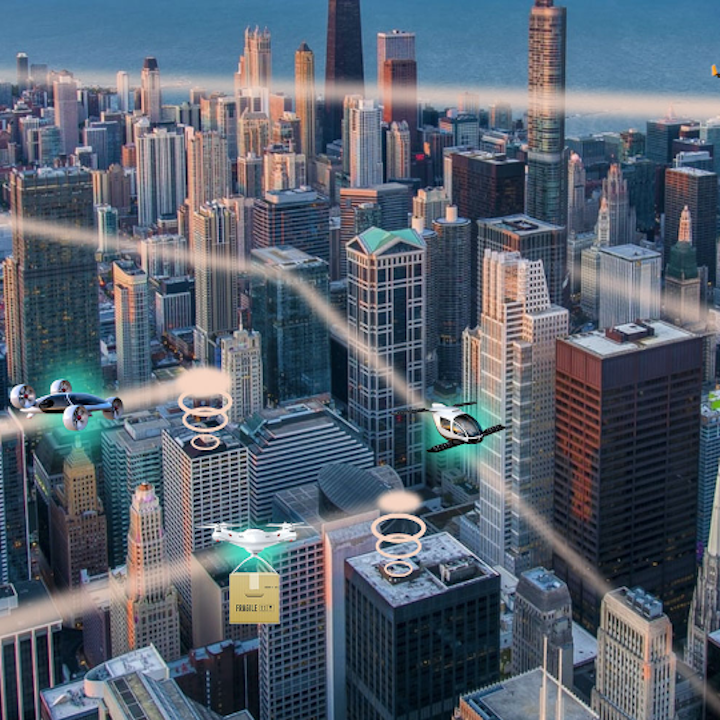
Integrate drones into shared airspace in real time
Coordinate with crewed emergency responders
Treat drones as a standard operational asset rather than an exception
Provides a digital foundation for conducting cooperative operations near critical infrastructure and large public gatherings.
This capability fundamentally changed how drones were used in day-to-day public safety operations.