






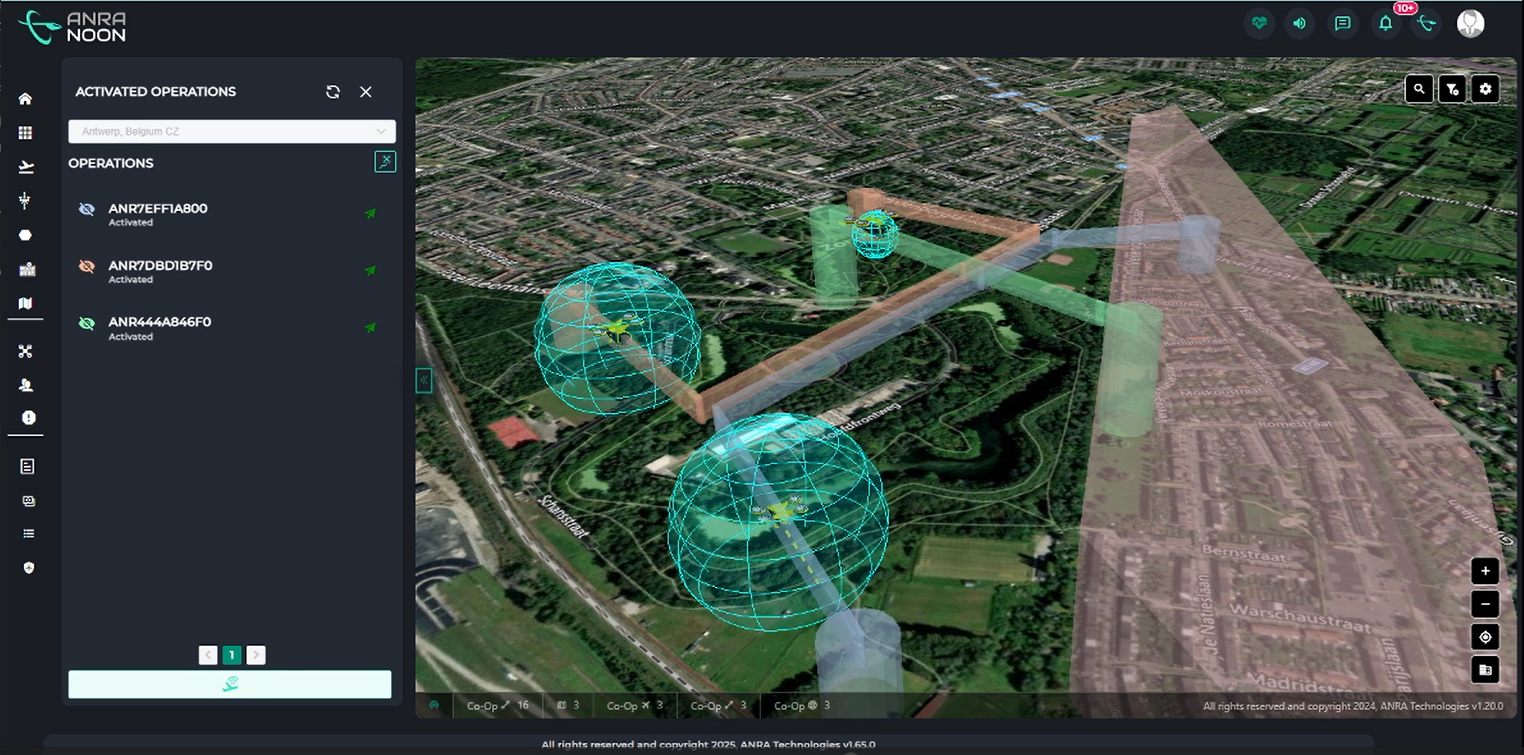
Shared Skies: Enabling Overlapping Drone Operations Using UTM
The future of aviation isn’t about a single drone flying in isolation, it’s about many different aircraft, operated by different organizations, safely sharing the same airspace at the same time.
In the UK, that future is now being actively developed in the North West. A project funded under the CAA’s Airspace Modernisation Strategy (AMS), led by ANRA Technologies UK in partnership with Manna, Wing, and Lancashire Fire and Rescue Service, is establishing one of the first operational multi-user drone ecosystems in the country. The goal is simple but transformative: demonstrate that multiple independent operators can safely conduct simultaneous drone operations, from emergency response to logistics, within the same airspace.
This is not a demonstration of a single operator flying a drone.
It is a demonstration of shared airspace.
Learning from the U.S. Shared Airspace Programme
The UK effort builds on real operational experience already underway in the United States through the U.S. Shared Airspace initiative. Originally developed through FAA-supported operational programs, Shared Airspace has now evolved beyond a single geographic site into a broader operational model used by multiple operators across different locations.
In the U.S., the challenge was clear: traditional air traffic management was never designed for hundreds, and eventually thousands, of low-altitude aircraft conducting routine missions such as inspection, delivery, and public safety response. Instead of centralized control, the Shared Airspace model uses a federated UTM architecture in which operators share operational intent digitally, allowing systems to identify and resolve conflicts before flights occur.
Using cooperative data exchange and industry standards, diverse operators, including delivery services, utilities, and public safety agencies, can coordinate in real time without relying on traditional air traffic control separation. The result is a scalable system where multiple missions can safely coexist in the same operational environment.
The key insight from the U.S. programme is this:
Safe drone operations at scale will not be achieved by segregating operators , it will be achieved by coordinating them.
Applying the Concept in the UK
The Lancashire project applies these operational lessons to the UK regulatory and operational environment. Rather than focusing on a single operator approval, the project is structured around simultaneous, independent operations in the same airspace. The consortium will gather operational data to support policy and regulatory development for routine Beyond Visual Line of Sight (BVLOS) operations under the UK’s modernization roadmap.
The emphasis is not only on technology, but on procedures, governance, and real-world workflows. The project demonstrates how emergency responders, commercial operators, and other authorized users can share situational awareness and coordinate activity through digital airspace services.
This approach moves drone integration beyond individual waivers and case-by-case approvals and toward an operational framework where access to the sky can be managed dynamically and safely.
From Trials to Infrastructure
What makes Shared Airspace significant is that it represents a shift in thinking about aviation. Historically, airspace safety depended on human controllers separating aircraft. In the emerging low-altitude environment, software-based coordination enables aircraft to remain safely separated before they even take off.
In practical terms, that means a delivery drone, a fire-service UAV, and an infrastructure inspection flight can operate at the same time without conflict, not because they are isolated, but because they are digitally coordinated.
The U.S. Shared Airspace initiative demonstrated the operational viability of this model. The UK Shared Airspace programme is now extending it into a new regulatory environment and helping inform how such operations can scale nationally.
Together, these efforts are shaping a future where airspace becomes a managed digital ecosystem, supporting logistics, public safety, infrastructure monitoring, and eventually advanced air mobility.
Routine drone operations will not arrive through a single breakthrough moment.
They will emerge through coordinated systems, shared standards, and trusted infrastructure, the foundations of truly shared skies.
