






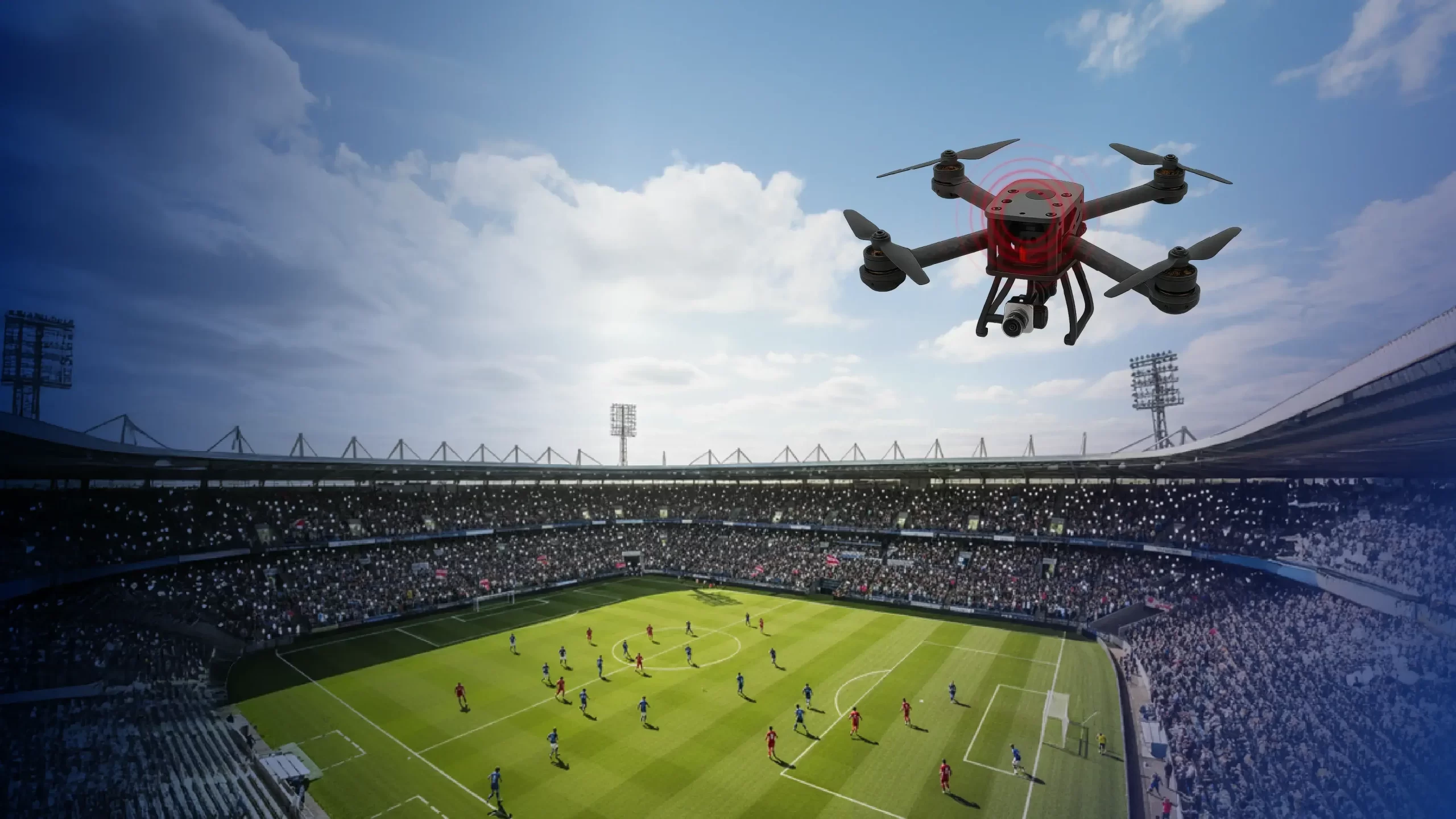
Securing the Skies for the FIFA World Cup: Considerations for American Host Cities
The U.S. Government has taken a major step toward protecting large public events from drone threats.
In a historic announcement, the Federal Emergency Management Agency (FEMA) awarded $250 million through the new Counter-Unmanned Aircraft Systems (C-UAS) Grant Program to the 11 states hosting FIFA World Cup 2026 matches and the National Capital Region. This funding will allow state and local agencies to strengthen their ability to detect, identify, track, and mitigate drone threats ahead of what is expected to be the largest sporting event in world history.
The initiative reflects a broader national effort to protect U.S. airspace during mass gatherings, aligned with the Executive Order on Restoring American Airspace Sovereignty and supported by new authorities under the SAFER SKIES Act.
While the funding enables agencies to procure detection and mitigation technologies, one challenge remains:
How do cities turn multiple sensors and systems into a coordinated operational capability?
This is where integrated airspace management platforms become essential.
The Challenge: Too Many Different Types of Sensors, Not Enough Coordination
Modern counter-drone deployments typically involve multiple sensor technologies, each possessing their own advantages and limitations. The most effective solutions use a layered approach, integrating sensors that operate across different physical mediums to improve detection reliability and reduce blind spots. These systems typically combine radio frequency (RF) detection, radar, electro-optical/infrared (EO/IR) cameras, and acoustic sensors.
Each of these systems generates its own data feed. Without integration, security teams often face a fragmented operational picture during high-pressure events. Some vendors provide a single common operating picture that displays all sensors on one screen, but this often creates vendor lock-in, making it difficult to add, replace, or integrate sensors from other providers.
A more effective approach uses an open integration architecture that separates sensors from the command-and-control platform. This allows different technologies to feed a unified operational picture while preserving the flexibility to add or change sensors as requirements evolve.
Compounding this challenge is the scale of major events like the FIFA World Cup, where stadiums, fan zones, airports, and transportation corridors must all be monitored simultaneously. Security teams require more than individual sensor feeds or isolated systems. They need a single operational environment that fuses all available data sources and delivers real-time situational awareness, enabling operators to quickly distinguish between authorized drone activity and unknown or potentially hostile operations.
ANRA’s Approach: Unified Airspace Awareness
ANRA Technologies, addresses this challenge through a combination of two core capabilities: SIOP and UTM
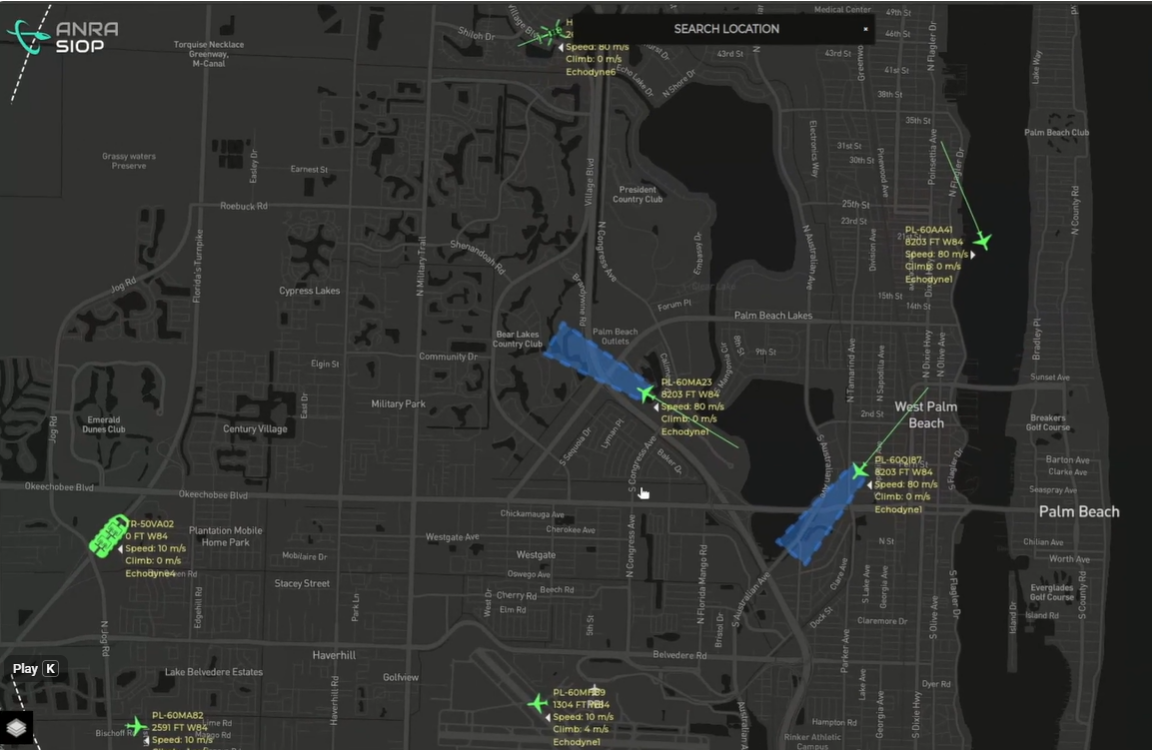
Single Integrated Operational Picture (SIOP)
ANRA’s SIOP platform aggregates inputs from multiple surveillance sensors and data sources to provide a real-time operational picture of the airspace. The platform correlates disparate data into a unified view, allowing detections from multiple sensors to be fused into a single track. Operators can also choose to view each sensor feed independently, giving them the flexibility to analyze data at either the fused or individual sensor level.
Security operators can:
- view all drone detections in a unified interface
- correlate sensor inputs across radar, RF, and visual sensors
- track drone movements in real time
- coordinate response actions across agencies
Most importantly, SIOP is combined with ANRA’s FAA-approved UAS Traffic Management Capability (UTM) to enable operators to quickly distinguish between authorized and unauthorized drones, reducing confusion and false positives.
Integrated UTM / U-space Capability
Major international events often involve authorized drone operations, including:
- broadcast media drones
- public safety operations
- emergency response flights
- infrastructure monitoring
ANRA’s UTM/U-space platform enables the safe coordination of these cooperative drone operations while simultaneously supporting counter-drone monitoring.
By combining UTM with SIOP, operators can clearly differentiate:
- authorized (“blue force”) drones
- unidentified drones
- potentially hostile aircraft
This integrated approach prevents security teams from inadvertently disrupting legitimate operations while maintaining strict control over protected airspace.
AI-Driven Data Processing
To handle the scale and complexity of major event environments, ANRA’s platform incorporates AI and machine learning agents that automate critical monitoring tasks.
These agents perform functions such as:
- continuous sensor monitoring
- anomaly detection
- automated correlation of multi-sensor data
- intelligent sensor tasking
By automating data processing, the system enables operators to focus on decision-making rather than manual data interpretation.
Built for Interoperability
ANRA’s platform supports the NATO adopted SAPIENT standard (BSI Flex 335 v2:2024), allowing rapid integration with a wide range of counter-UAS sensors and mitigation technologies.
This open architecture enables cities to deploy best-of-breed sensors while maintaining a unified operational picture, avoiding the integration challenges that often slow down counter-drone deployments.
Proven in Real-World Multi-Agency Environments
ANRA’s technology has already been demonstrated in demanding operational environments.
The company has participated in four NATO C-UAS Technical Interoperability Exercises (TIEs), integrating dozens of sensor systems into a unified operational dashboard while simultaneously supporting authorized drone operations.
In these deployments, ANRA provides a complete detect-identify-track-decide-act workflow, including the coordinated digital tasking of mitigation systems. ANRA is believed to be the first to combine UTM with C-UAS, successfully mitigating a drone threat by tasking a cyber effector.
A Scalable Architecture, Long Term Solution for Major Events
The upcoming FIFA World Cup and America 250 events represent a new level of complexity for event security.
While protecting the venue and attendees, security agencies must also consider legitimate drone operations that support media coverage, security, emergency response, and public safety.
ANRA’s NATO proven SIOP + UTM architecture provides a scalable framework for managing both cooperative and non-cooperative aircraft in the same operational environment, avoiding vendor lock and ensuring alignment with the future FAA drone rules.
Supporting Cities Preparing for 2026
With $250 million now allocated through FEMA’s C-UAS Grant Program, host cities have a unique opportunity to deploy advanced airspace security capabilities ahead of the FIFA World Cup.
Solutions that combine multi-sensor integration, operational airspace management, and AI-driven analytics will play a critical role in enabling agencies to respond quickly and effectively to emerging drone threats.
At ANRA Technologies, we look forward to supporting state and local agencies as they build the next generation of secure, interoperable airspace protection systems for major public events.
